
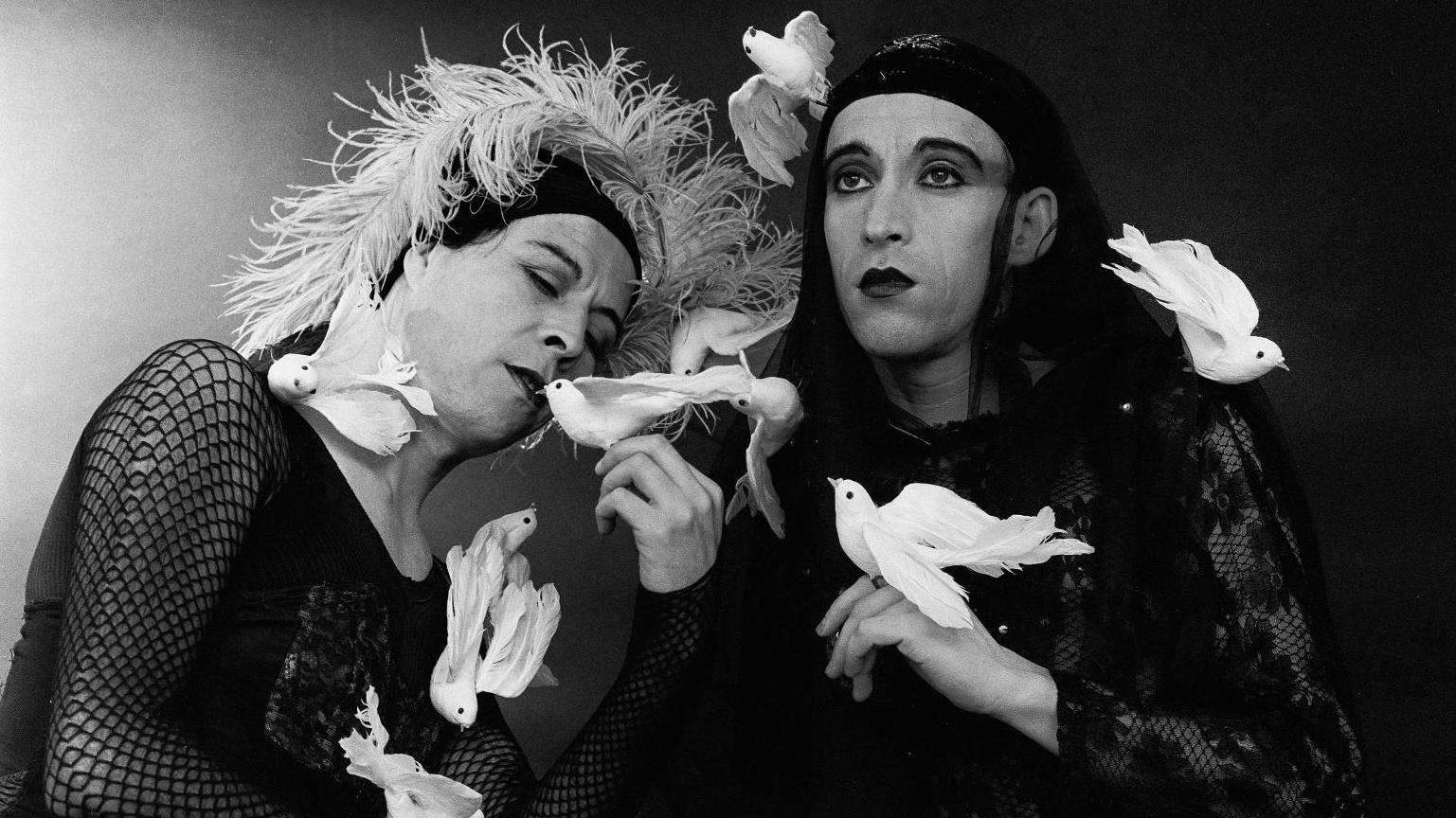
This retrospective brings together, for the first time, all extant works and the surviving documentation of the ephemeral actions of the Yeguas del Apocalipsis (Mares of the Apocalypse), the duo formed by Francisco Casas (b. 1959) and Pedro Lemebel (1952–2015).
Writers turned artists, they were intensely active in Chile from 1987 to 1993, challenging the political and social contexts of the dictatorship and the country’s transition to democracy. They did so both by unexpectedly bursting into public spaces with performative actions and through announced stagings, which they generally carried out either in drag or nude. Due both to the countercultural and often spontaneous nature of their work—largely unconcerned with documentation—and to institutional disinterest, a significant portion of their actions has remained undocumented. Hence, this exhibition presents some of them solely through description, based on memories.
The Yeguas rejected the established artistic protocols. They independently practiced a militant transgender dissidence that was at once “Third World,” poor, and situated in marginality from a radical left position. Their emancipatory actions inverted orders: what had been deemed unacceptable -the queer- acquired a destabilizing critical power. They disruptively used brazen, non-normative bodies, scandalously intruding into situations where their mere presence in drag altered the politics of domination.
This activity was always affirmative, never victimizing, and extended transversally from denouncing the dictatorship, the massacre in China, homophobia, and repressions of all kinds, to supporting the families of the disappeared, people living with HIV/AIDS, feminism, and critiquing a homosexual struggle focused solely on itself.
The artists contributed to the affirmation of difference and to the advancement of social, cultural, and gender politics in Chile and beyond. The radical nature of their challenge to prejudices and dominant structures, the intersectional subversion of their actions against the established order on both the right and the left, together with the provocative creativity of their visual imagery, are paradigmatic of a universal libertarian praxis of art.
*This exhibition presents conten that may affect the sensitivity of some people.